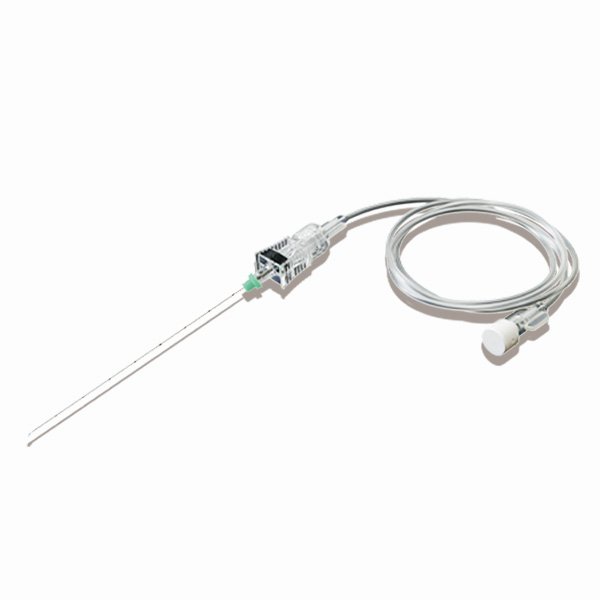
Imagine a surgical needle that doesn't just go straight, but can artfully navigate around sensitive organs, bypass critical blood vessels, and curve precisely to hit a tiny target deep within the body. This isn't science fiction; it's the cutting edge of Needle Design Innovations for Aseptic Puncture, poised to revolutionize minimally invasive surgeries. For decades, doctors have relied on rigid needles, limited to a straight path—a severe constraint when dealing with the intricate, dynamic landscape of the human body. But thanks to ingenious advancements in flexible needle technology, we're on the cusp of an era where surgical precision reaches unprecedented levels, making procedures safer, more effective, and far less invasive.
At a Glance: What You Need to Know About Flexible Needles
- The Big Leap: Traditional rigid needles are giving way to flexible, steerable needles, primarily made from nickel–titanium alloy, allowing for curved, non-linear trajectories.
- Why It Matters: This innovation bypasses obstacles, avoids critical structures, and corrects for natural body movements (like breathing or heartbeats), drastically improving accuracy and reducing secondary injuries.
- Key Applications: Flexible needles promise to transform fields from neurosurgery and cancer biopsies to brachytherapy and targeted drug delivery, making previously challenging procedures safer and more accessible.
- How They Work: Their secret lies in asymmetric bevel tips, which, when combined with feed (advancement/retraction) and rotational movements, allow for precise steering.
- The Science: Success hinges on sophisticated models (mechanical, FEM, kinematic) to understand needle-tissue interaction and advanced path-planning algorithms (graph theory, sampling, intelligent search, local avoidance) to guide their journey.
- The Future is Robotic: While not yet in widespread clinical use, robot-assisted systems powered by AI are on the horizon, promising to integrate human expertise with unparalleled precision for complex procedures.
Beyond the Straight Shot: Why We Need Smarter Needles
Percutaneous puncture is a cornerstone of modern medicine. It's how we diagnose early cancers through biopsies, deliver targeted therapies, and even perform complex neurosurgeries. Yet, the tools for these crucial procedures—rigid, straight needles—have presented significant challenges. Think about trying to navigate a bustling city with only one-way streets and no turns. That's essentially what a surgeon faces, trying to reach a deep, often tiny target while avoiding vital organs, blood vessels, and nerves.
Traditional needles are also unforgiving. Any slight tissue deformation, patient movement, or even a heartbeat can cause deviations, leading to decreased accuracy and, sometimes, painful secondary injuries. Imagine a biopsy where the needle misses its mark, requiring multiple attempts and increasing patient discomfort and risk. It's a problem that urgently demands a more sophisticated solution.
Enter flexible needles. These revolutionary instruments, often crafted from superelastic nickel–titanium alloy, feature an asymmetric bevel tip. This clever design allows the needle to deflect and bend when advanced, creating a non-linear, circular arc trajectory. This means surgeons can now plan paths that curve around obstructions, precisely reaching targets that were previously unreachable or too risky with rigid instruments.
The Clinical Frontier: Where Flexible Needles Make a World of Difference
The potential impact of flexible needles on patient care is immense, promising to open new avenues for treatment and diagnosis across a spectrum of medical specialties.
Expanding Horizons in Neurosurgery
Functional neurosurgery, including procedures like Deep Brain Stimulation (DBS), Vagus Nerve Stimulation (VNS), and Spinal Cord Stimulation (SCS), currently grapples with the limitations of linear probe trajectories. These straight paths restrict where probes can be placed, sometimes forcing surgeons to compromise on target effectiveness to ensure safety. Flexible needles could change this entirely, enabling non-linear paths that access a wider range of targets, potentially improving outcomes and significantly reducing risks to delicate brain structures.
Precision for Puncture Biopsies
For the nearly 19-20 million people diagnosed with cancer annually, an accurate biopsy is often the first critical step toward treatment. Puncture biopsy, which involves extracting tissue samples, absolutely demands precise needle placement. Flexible needles, guided by sophisticated puncture modeling and path planning, promise to deliver unprecedented accuracy, ensuring reliable tissue specimens the first time. Real-time imaging techniques like ultrasound and MRI further enhance this precision, providing visual feedback for on-the-fly trajectory adjustments. This accuracy is paramount, as errors can lead to repeated procedures, delayed diagnoses, and increased patient anxiety. Moreover, preventing unnecessary tissue damage is crucial.
Redefining Brachytherapy and Targeted Drug Delivery
Brachytherapy, a localized cancer treatment where radioactive material is precisely placed within a tumor, is another area ripe for transformation. Accurate trajectory simulation with flexible needles reduces collateral damage to healthy surrounding tissue. Similarly, for targeted therapies that deliver drugs directly to specific cancer sites, avoiding damage to adjacent organs is critical. Path planning with flexible needles provides physicians with precise trajectory references, and real-time planning, often guided by ultrasound or CT feedback, ensures optimal drug delivery. The ultimate goal is to maximize therapeutic effect while minimizing side effects, a cornerstone of modern oncology.
The current reliance on manual needle manipulation, though highly skilled, is inherently difficult and prone to human error. This challenge has fueled the rapid development of robot-assisted puncture systems. These systems are designed to precisely control needle position and trajectory, promising a future where the surgeon's expertise is amplified by robotic precision. While much of this research currently relies on prosthetic tissues due to technical and ethical considerations, the journey toward formal clinical adoption is well underway, with puncture modeling and path planning as critical prerequisites for safe and effective integration.
The Science of Steering: How Flexible Needles Interact with Tissue
To make flexible needles a clinical reality, scientists must first understand how they behave within the complex environment of the human body. This requires accurate modeling of needle-tissue interaction.
Mechanical Models: The Physics of Puncture
Mechanical models attempt to simulate the myriad forces at play when a needle punctures and moves through tissue. These forces include capsule stiffness, friction, cutting resistance, and extrusion pressure, all of which contribute to the needle's bending and steering. Examples range from simplified cantilever beam models to more complex virtual spring theories. While comprehensive, the real-world analysis of these forces is incredibly intricate, often necessitating significant simplifications to be computationally feasible.
Finite Element Method (FEM) Models: High Fidelity, High Demand
The Finite Element Method (FEM) has emerged as the most popular and powerful approach for modeling complex needle-tissue interactions. It works by breaking down an intricate system (like a needle moving through tissue) into many smaller, manageable units. This allows for detailed analysis of stress, strain, and deformation, offering high accuracy. However, this precision comes at a cost: FEM models demand extensive computation, making them challenging for real-time applications during surgery. Techniques like cohesive elements, damage models, and Arbitrary Lagrangian–Eulerian (ALE) or Coupled Eulerian-Lagrangian (CEL) methods are employed to capture the nuances of tissue response.
Kinematic Models: Simpler, Faster, More Practical
In contrast to the force-intensive mechanical and FEM models, kinematic models focus on the needle tip's motion, largely sidestepping complex force analysis. Flexible needles are primarily influenced by two degrees of freedom: feed movement (advancing or retracting the needle) and rotational motion (which changes the bending direction due to the asymmetric tip).
By manipulating these two actions, flexible needles can achieve a variety of trajectories:
- Multiple arcs: Primarily achieved by feed movement combined with 180° rotations, allowing the needle to curve and then reorient.
- Spiral line: Created by simultaneous rotation and feed, where the feed rate is much higher than the rotation rate, resulting in a gentle, spiraling path.
- Nearly straight line: Achieved when the feed rate is much lower than the rotation rate, effectively "canceling out" much of the deflection and producing a trajectory close to a straight line.
These models, often likened to a bicycle model (BM) or unicycle model (UM) due to their simplicity and focus on steering, offer significant practical advantages. They are less computationally intensive than mechanical or FEM models, making them widely used in real-time path planning applications.
Navigating the Body: The Algorithms Guiding the Way
Even with the most sophisticated flexible needle, a surgeon still needs a precise map and a clear route. This is where path planning algorithms come in. Inspired by mobile robotics, these algorithms are broadly categorized into global (where the entire environment is known, aiming for optimal paths but with high computation) and local (operating with partial, dynamic information, allowing real-time adjustments but sometimes risking suboptimal routes).
Graph Theory Search: Finding the Shortest Path
These algorithms represent the surgical environment as a graph, with nodes (points) and edges (possible movements), then search for the most efficient path.
- Dijkstra's Algorithm: A classic method for finding the shortest path between nodes. While simple, its time complexity (O(n^2)) can be a hurdle for complex environments, and it struggles with dynamic changes or "negative" (detrimental) path segments. It's often improved by combining with other techniques.
- A* Algorithm: An enhancement over Dijkstra, A* uses an estimation function to prioritize more promising paths, significantly improving efficiency by avoiding futile searches. However, it might not always explore all feasible solutions or guarantee the absolute optimal path. Enhanced A* variants address issues like path length, search speed, and sharp turns.
Limitations for Flexible Needles: Paths generated by these algorithms typically consist of connected line segments. Flexible needles, however, require smooth, continuous curves. Therefore, outputs from graph theory searches often need further smoothing and optimization (e.g., combining with RRT or Artificial Potential Fields) to be truly applicable for flexible needle steering.
Sampling-Based Path Planning: Exploring the Possibilities
These algorithms explore the environment by randomly sampling points, building a "roadmap" of collision-free paths.
- Rapidly-exploring Random Trees (RRT): Developed by Lavalle in 1998, RRT efficiently explores high-dimensional spaces without requiring an explicit model of the entire environment, making it adaptable to dynamic scenes. Its strength lies in its ability to quickly find a path, even in complex spaces. However, it can be slow and often yields sub-optimal paths. Variants like I-RRT, RRT*, and PF-RRT have been developed to enhance accuracy, efficiency, and path quality.
- Probabilistic Road Map (PRM): Introduced by Kavraki et al. in 1996, PRM constructs a path graph by randomly sampling points, checking for collisions, and connecting neighboring points to form a roadmap. While PRM is probability-complete (meaning it will eventually find a path if one exists), it doesn't guarantee an optimal path, and its efficiency can degrade in environments with dense obstacles or narrow passages. Improvements often focus on generating smoother trajectories through interpolation.
Limitations for Flexible Needles: The random nature of these algorithms often produces sub-optimal paths that don't inherently satisfy the precise motion constraints of flexible needles (e.g., continuous curvature). Like graph theory methods, they require post-processing and optimization to be suitable for actual steering.
Intelligent Search Algorithms: Learning from Nature
Also known as "bionic" algorithms, these heuristic global optimization methods are inspired by natural processes. They iteratively improve solutions but don't always guarantee an optimal or perfectly predictable outcome without robust path evaluation functions.
- Genetic Algorithm (GA): Simulating natural selection (Bremermann, 1958), GAs use processes like mutation, crossover, and inheritance to evolve optimal solutions for needle design and trajectories. They can, however, be susceptible to converging on a local optimum rather than the global best, and their efficiency can sometimes be low.
- Ant Colony Optimization (ACO): This swarm intelligence algorithm (Dorigo and Maniezzo, 1991) mimics how ants find the shortest path to food by depositing pheromones. While effective in static environments, ACO can suffer from slow convergence and local optimization issues, especially in complex, dynamic surgical settings.
- Particle Swarm Optimization (PSO): A parallel swarm intelligence algorithm (Kennedy and Eberhart, 1995), PSO is favored for its easy implementation, high precision, and fast convergence. However, it can sometimes converge prematurely and struggle with local optimization in problems with multiple "peaks" of potential solutions. Adaptive PSO variants are being developed to improve efficiency and accuracy in these complex environments.
Limitations for Flexible Needles: These algorithms excel at finding feasible solutions but typically need integration with specific path evaluation functions to ensure the generated path is truly optimal for flexible needles, especially when dealing with variable curvature or multiple target points.
Local Obstacle Avoidance: Real-Time Precision
Unlike global planners, local obstacle avoidance algorithms operate with limited, dynamic environmental information, allowing for real-time optimization. They are simple and fast but risk getting stuck in local optima (e.g., a cul-de-sac).
- Artificial Potential Field (APF): (Khatib, 1986) This method imagines an attractive force pulling the needle toward its goal and repulsive forces pushing it away from obstacles. The result is a smooth, safe path. The primary drawback is the risk of local optima or oscillation where attractive and repulsive forces balance out, trapping the needle before it reaches its target. APF is often combined with other techniques like FEA, RRT*, or curve fitting to handle dynamic 3D environments, improving positioning accuracy and safety. For example, ensuring the needle avoids generating any vial septum puncture debris during its delicate passage, much like a surgical instrument must navigate the human body without causing unnecessary trauma.
- Dynamic Window Approach (DWA): A velocity-based dynamic planning method, DWA excels at rapid, collision-free navigation by calculating optimal speeds and trajectories in real-time. However, it can also become trapped in local paths in highly complex environments. Improved DWA algorithms often employ multi-objective optimization to enhance stability and obstacle avoidance.
Applications for Flexible Needles: Local path planning is invaluable for intraoperative medical robot navigation. It provides smooth, precise motion paths, crucial real-time adjustments to unforeseen movements, and enables remote control, all contributing to significantly improved surgical accuracy and patient safety.
Other Pioneering Algorithms
The field is rich with diverse approaches:
- Markov Decision Processes (MDPs): Used for dynamic planning, especially when dealing with the inherent uncertainty of motion within the body.
- Geometric Algorithms: Such as 2D S-type double-arc methods, which mathematically define smooth curves suitable for flexible needle motion.
- Kalman Filters: Employed for real-time estimation of the needle tip's position and orientation, crucial for feedback and correction.
- Inverse Kinematics: Allows for calculating the necessary joint movements (or needle manipulations) to achieve a desired 3D path.
- Deep Reinforcement Learning (DRL): Advanced AI techniques like Deep Q-networks (DQN) and Double DQN are being explored to optimize surgical paths with real-time CT guidance, learning optimal strategies through trial and error.
While many of these advanced methods are still in 2D simulation stages, they represent critical steps toward fully autonomous and intelligent flexible needle steering systems.
The Road Ahead: Shaping the Future of Minimally Invasive Surgery
The journey of flexible needles from concept to widespread clinical use is ongoing, with several exciting trends defining its future trajectory.
1. Optimization and Dynamic Adaptation: Beyond the Ideal
Current research often focuses on static, idealized environments. However, the human body is a dynamic, unpredictable landscape. Future development demands continuous optimization of path-planning algorithms to meet the unique challenges of puncture surgery, moving from theoretical scenarios to real-world variables like organ movement, tissue elasticity changes, and unforeseen obstacles.
2. The Power of Combination: Synergistic Algorithms
No single algorithm is a silver bullet for the complexities of surgical navigation. The future lies in combining the strengths of multiple high-quality algorithms. Imagine an RRT algorithm for global exploration, refined by a graph search for optimal path valuation, and then smoothed and dynamically adjusted by an APF for local obstacle avoidance. This "hybrid" approach promises to leverage the best of each method, mitigating weaknesses and significantly improving overall performance and search speed.
3. Image-Guided Dynamic Path Planning: Seeing is Steering
Real-time, image-guided planning, both preoperatively and intraoperatively, is paramount. This means developing better ways to identify and localize needle tips, distinguish delicate neurovascular tissues in 3D dynamic environments, and accurately track moving targets and organs. Enhanced imaging feedback will allow for immediate trajectory replanning, adapting to the body's natural movements and unexpected surgical scenarios.
4. Artificial Intelligence Robot-Assisted Systems: The Precision Partnership
The manual manipulation of flexible needles, even with advanced planning, remains incredibly challenging. This underscores the vital role of AI-powered robot-assisted systems. These systems will integrate the invaluable experience and intuition of human surgeons with the unparalleled precision and computational power of AI. By providing a robust theoretical and technical foundation for precise manipulation, AI-robot collaboration holds immense scientific and societal value, pushing the boundaries of medical technology and delivering safer, more effective care.
Precision, Delivered: A New Era of Surgical Possibilities
Needle design innovations for aseptic puncture are not just about creating a fancier needle; they are about fundamentally redefining what's possible in minimally invasive surgery. By enabling surgeons to navigate the body with unprecedented precision, bypassing obstacles, and adapting to real-time changes, these flexible needles promise to make critical procedures safer, more effective, and accessible to a wider patient population. The path from research to widespread clinical practice is paved with challenges, but the advancements in needle design, modeling, and intelligent path planning are rapidly transforming complex medical interventions into procedures of meticulous accuracy, ushering in a new era of surgical excellence.